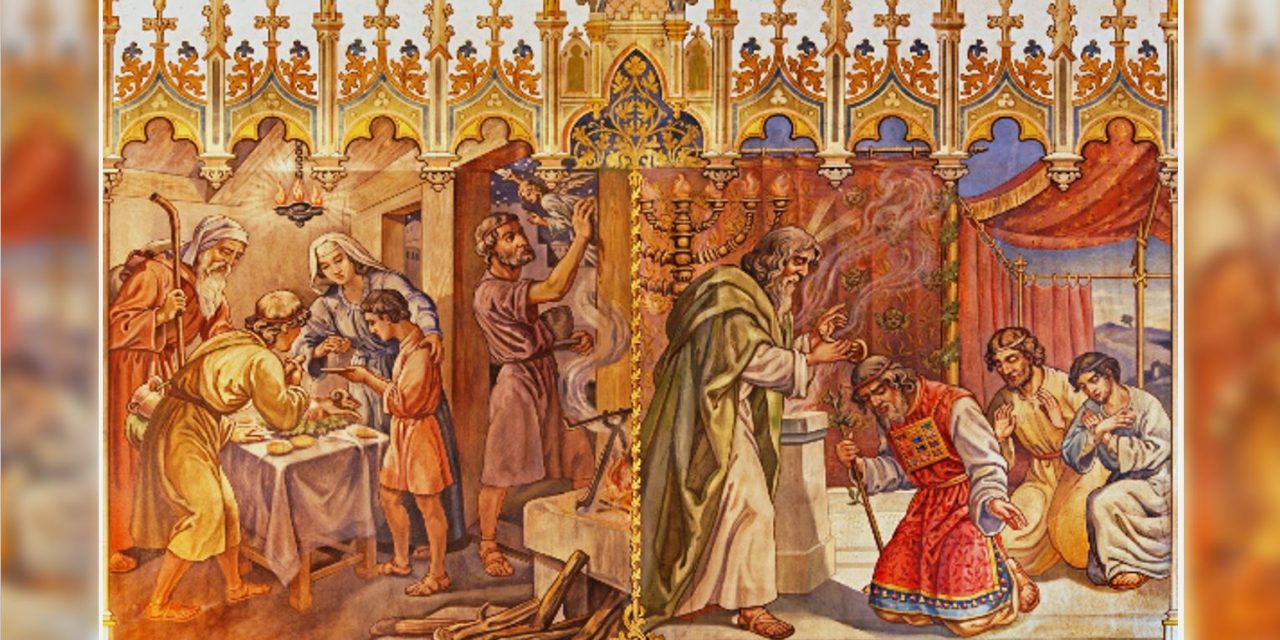
Queen Esther and her legacy to confront present-day anti-Semitism

Queen Esther and her legacy to confront present-day anti-Semitism

“For if you remain completely silent at this time, relief and deliverance will arise for the Jews from another place, but you and your father’s house will perish. Yet who knows whether you have come to the kingdom for such a time as this?” Esther 4:14
When God makes a promise, He never breaks it. Throughout history, God has revealed His sovereignty by manoeuvring into position people, governments and circumstances to fulfil His plans and purpose. But He also calls those that love Him to respond to His call with obedience.
The young Queen Esther, a Jewish maiden, was chosen by God for an appointed time when the Jewish people lived under the Persian Empire. Her story was at the very centre of Middle East geopolitical events at the time. King Ahasuerus’ kingdom was the largest the world had ever seen. It covered the area now known as Turkey, as well as Iraq, Iran, Pakistan, Jordan, Lebanon, and Israel; it also encompassed sections of modern-day Egypt, Sudan, Libya, and Saudi Arabia.
The Jewish people faced a crisis when the king appointed Haman to take charge over all his affairs. Haman was an evil man that hated the Jews. His hatred wasn’t influenced by his experiences, instead it was deeply rooted in his world-view, stemming from his heritage and grounded by his upbringing.  He was a descendent of Agag, who was the king of the Amalekites, a people who were Israel’s enemy for generations. The spirit of anti-Semitism was once again emerging with potentially devastating repercussions.
Esther 3:8-9 records that Haman told the king, “There is a certain people dispersed among the peoples in all the provinces of your kingdom who keep themselves separate. Their customs are different from those of all other people, and they do not obey the king’s laws; it is not in the king’s best interest to tolerate them.” 
The potential imminent genocide of the Jewish people, much like the Holocaust that happened during the 20th Century, began with a non-violent form of anti-Semitism. It began with a hatred for the Jewish people, simply for being Jews. This attitude of intolerance paved the way for a hatred so intense that the next question Haman asked was “If it pleases the king, let a decree be issued to destroy them.”
In today’s anti-Semitism, as it was in Esther’s day, the Jewish people are hated simply for being Jews. Anti-Semitism is never excusable. It seems to have no rationality or logic , yet anti-Semitism always has its root. Whether found in the Far Left, the Far Right or in radical Islam, we must resolve to never be silent in confronting it. Even within the church, anti-Semitic attitudes exist due to false teaching about God’s plan for Israel and the Jewish people. This is something that must be addressed.
Likewise, hatred for the State of Israel is a hatred for the Jewish people having their own State. It is why when there are so much persecution and injustices across the Middle East, anti-Semites will pick on the world’s only Jewish state, Israel. When leadership in Iran or the terrorist organisations, Hamas, Hezbollah or ISIS call for the destruction of Israel, they mean the Jews. When pro-Palestinian protesters in London or New York or Sydney chant, “From the river to the sea, Palestine will be free” they are not talking about the so-called West Bank or Gaza, they are inferring the entire Land of Israel, the homeland of the Jewish people for over 3,000 years, will be “free of all Jews”.
Esther was a remarkable woman and an incredible example of wisdom and courage in the midst of this same hatred. She took her life in her hands and decided to intercede with the king on behalf of her beloved people despite the consequences to herself. This is because anyone approaching the king without being summoned was immediately put to death.
When done, I will go to the king, even though it is against the law. And if I perish, I perish” (Esther 4:16).
Esther had a love for Israel. She had a trust in God for Israel’s deliverance. But she also had a strategy. She enlisted Mordecai to gather the Israelites together and fast for three days, and by implication pray for her.
It is worth noting that hatred for Israel is not just a political matter – it is a spiritual one. That is because anti-Semitism is also anti-God. Praying for Israel is a wise foundation for standing with Israel practically. Esther recognised that the God of Abraham, Isaac and Jacob is the defender of Israel and it is only with His leading that the evil of anti-Semitism can be effectively countered.
Esther’s bravery and willingness to stand up for her people reminds us that we must not be silent in the presence of evil, but must confront and eliminate it. We are reminded that while oppressors come and go, God’s promise and covenant with his people, Israel, is everlasting.
The ancient problem of anti-Semitism exists in our world today and calls all those that follow the Bible to respond. Let us follow Esther’s example by not remaining silent when confronted by evil and standing for Israel “for such a time as this”.
Christians United for Israel 

Jesus in the Passover – exploring the Jewish roots of Christianity


Jesus in the Passover – exploring the Jewish roots of Christianity

“So this day shall be to you a memorial; and you shall keep it as a feast to the LORD throughout your generations.”  – Exodus 12:14a

For more than three millennia, the Jewish people have faithfully kept from generation to generation the observing of the Passover. This important festival retells the story of the nation of Israel with its account of obedience, expectation and deliverance when the people of God were redeemed from brutal enslavement in Egypt.
The focus of the celebration is a remembrance of the Passover lamb, which was sacrificed so that the first born of every home might be spared as the Lord passed over the houses during the last and final of ten plagues in Egypt. The slaughtered lamb was to be eaten and its blood smeared onto the doorposts of their properties as a sign of faith.
For Christians, it is important to recognise that Passover plays a central part of the Christian faith. In fact the early church celebrated Passover for 300 years after the death of Jesus until Constantine made it illegal in an effort to separate Jews from Gentiles. This deliberate severing led to horrific anti-Semitism across Europe, including in England as we explain later in this article.

JESUS KEPT THE PASSOVER
The Bible presents the Jewish feast of Passover as an important component in understanding Christianity. The first occurrence of the Passover in the New Testament was when the young Jesus visited Jerusalem with his parents, as He did every year.
Luke chapter 2, verse 41 states:
“His parents went to Jerusalem every year at the Feast of the Passover. And when He was twelve years old, they went up to Jerusalem according to the custom of the feast.
After two thousand years of anti-Semitic teaching, the church has lost sight of the Jewish nature of Jesus, who Himself celebrated Passover. But let us remember that Mary and Joseph raised Jesus, who was of the tribe of Judah, according to the traditions of the Jewish faith. He was taken to be circumcised on the eighth day (Luke 2:21); at the end of his twelfth year he was taken to the temple for His bar mitzvah, and Jesus began his ministry at 30 years of age (Luke 3:23) according to the custom of “entering into one’s full strength [life’s work]” at thirty (Everyman’s Talmud).
Judaism was the only religion on earth during the time of Jesus that believed in one omnipotent Supreme Being. The Jewish people gave to Christianity the foundation of the Word of God, so to overlook the Jewish background of Jesus and his practice of Judaism, is to undermine the very foundations of Christianity. As CUFI Founder John Hagee has repeatedly said, “The Jewish people do not need Christianity to explain their existence, but we cannot explain our existence without our Jewish roots.”

THE LORD’S SUPPER SIGNIFICANCE
It is with this appreciation of the Jewish nature of our Lord and Saviour Jesus Christ that we come to the evening before Jesus was crucified. All four Gospels indicate that Jesus’s death took place at the time of the Passover. In what is commonly referred to as the Lord’s Supper, the Bible makes it clear that the meal Jesus had with his disciple was the Passover Seder:
Matthew 26:17-19 states:
Now on the first day of the Feast of Unleavened Bread the disciples came to Jesus, saying to Him, “Where do You want us to prepare for You to eat the Passover?” And He said, “Go into the city to a certain man, and say to him, ‘The Teacher says, “My time is at hand; I will keep the Passover at your house with My disciples.”’” So the disciples did as Jesus had directed them; and they prepared the Passover.
And Luke 22:15
Then He said to them, “With fervent desire I have desired to eat this Passover with you before I suffer”

THE PASSOVER LAMB
In the New Testament, Jesus is described as the Passover Lamb (John 1:29; John 1:36; 1 Corinthians 5:7; 1 Peter 1:18-19; Revelation 7:14; Revelation 12:11). It is therefore symbolic that God specifically stipulated to Israel that the Lamb that was to be slaughtered was to be a “male without defect” (Exodus 12:5), which is the very same description given of Jesus (1 Peter 1:18-19; Hebrews 9;14).
The Passover lamb was selected five days before it was slaughtered. Some commentators have therefore drawn parallels to the significance that Jesus entered the city of Jerusalem five days before the lamb – the Passover sacrifice – was slaughtered in the temple.
When the lamb was roasted and eaten, none of its bones were to be broken according to Exodus 12:46. It was customary during an execution by crucifixion to break the legs of the victim. But, in the case of Jesus, though they broke the legs of the two robbers at his side, they did not break Jesus’ legs because he was already dead (John 19:32-36).

THE CUP
Among the many symbols included in the Passover meal are the five cups of wine. The first four cups of wine represent the four promises God made to the Israelites in Exodus 6:6-11. These cups all symbolise the deliverance and freedom from bondage in Egypt.
Therefore say to the children of Israel: ‘I am the LORD; I will bring you out from under the burdens of the Egyptians [Cup 1], I will rescue you from their bondage [Cup 2], and I will redeem you [Cup 3] with an outstretched arm and with great judgments.  I will take you as My people, and I will be your God [Cup 4]. Then you shall know that I am the LORD your God who brings you out from under the burdens of the Egyptians. (Exodus 6:6-7, emphasis added)
These four cups are often referred to as “The cup of remembrance” (Cup 1); “The cup of salvation” (Cup 2); “The cup of redemption” (Cup 3), and the “Cup of nationhood, both spiritual and physical” (Cup 4).
The New Testament names one of the cups—the cup taken after supper, which is traditionally the third cup. Jesus calls this cup “the new covenant in My blood, which is shed for you” (Luke 22:20). Later that evening in the garden of Gethsemane He cried out to the Lord in prayer, “Father, if it is Your will, take this cup away from Me; nevertheless not My will, but Yours, be done” (Luke 22:42). For Christians, Jesus’s willingness and obedience to “take this cup” is what forms the heart of Christian belief in Jesus’s redemptive sacrifice.
There is also a fifth cup, known as the cup of ultimate redemption, which has been part of the Passover since temple times. But since its inception, the cup has never been taken, awaiting the coming of the Messiah. The fifth cup of “final redemption”, also known as Elijah’s cup, corresponds to the fifth promise, stated in Exodus 6:8:
“And I will bring you into the land which I swore to give to Abraham, Isaac, and Jacob; and I will give it to you as a heritage: I am the LORD.’” [Cup 5]
Observant Jews to this day do not drink of the fifth cup, awaiting the coming of the reigning Messiah.
When Jesus and His disciples came to the final cup during their last Passover celebration together, Jesus refused to drink.
Luke 22:17-18 says,
Then He took the cup, and gave thanks, and said, “Take this and divide it among yourselves; for I say to you, I will not drink of the fruit of the vine until the kingdom of God comes.” 
All four Gospels tell of Jesus’ refusal to drink of the cup before His death and resurrection, but will do so when the “kingdom of God comes”.
The symbolism of the Passover meal continues even further: during the seder meal there are three matzot which are placed on top of each other. The middle matzah is subsequently broken in two with the smaller piece being eaten and the larger piece being wrapped in a white cloth and hidden. Following the meal, the children find the hidden matzah and receive a reward. There are various explanations as to why the Jews carry out this tradition, but no definitive answer.
Christian commentators see these three matzot to represent the Trinity of God (Father, Son and Holy Spirit), with Jesus being the middle matzah. The breaking of the middle matzah represents Jesus’ body being broken, the hiding of the matzah represents Jesus’ burial and the finding of the matzah represents Jesus’ resurrection.
Jesus, at the end of the Lord’s supper, takes the unleavened bread and breaks it, stating that it is symbolic of His body. Jesus gave his disciples the command to “remember” the Passover by instructing his disciples to always partake of it “in remembrance of me”.

A CHURCH SEPARATED FROM ITS JEWISH ROOTS
The parallels between Passover and the Lord’s Supper were sadly lost due to early Christendom’s attempt to sever Christianity from its Jewish roots. This disconnection paved the way to unbelievable hostility towards the Jewish people. In medieval Europe, Jews were forced to celebrate Passover with extreme caution and fear.
With the “Easter” festival and Passover regularly coinciding, Jews were often blamed for the Crucifixion and were resented for their rejection of Christianity. They became targets of hatred, superstitions and bizarre accusations. There were hundreds of blood libels throughout history resulting in the death of thousands of Jews at the hands of Christians.
One such example was in Norwich, England, on the Passover of 1144. A young man named William, a tanner’s apprentice, disappeared during the week of Easter, which coincided with Passover that year. Charges immediately arose that the Jews killed him as part of a ritual murder. The accusations were unfounded and the Sheriff of Norwich ignored the charges and granted the Jews protection. But the story was not forgotten, and the missing boy, William, became a martyr amongst the town’s people. A short time later, the Jews of Norwich were attacked by mobs seeking vengeance and were forced to flee.
Eleven years later, the blood libel resurfaced in England bringing horrific consequences to Jews attending a wedding in Lincoln. A Christian boy named Hugh was found in a cesspool where he apparently had fallen. After subsequent forced, tortured confessions, 19 Jews were hanged. Soon, the anti-Semites of England accused all of the country’s Jews of participating in ritual murder. The many accusations that followed were often accompanied by violent attacks against Jewish communities across the country. This false  conspiracy lasted in England for centuries.
These shameful acts of anti-Semitism could not be further away from the teaching and commands of Jesus. In remembering Jesus’s death they had in fact forgotten the Jesus of the Passover. The devolving of Christianity’s Jewish roots turned hearts away from loving the Jewish people to gradually fostering and enacting some of the most evil anti-Semitism imaginable. The extreme extent of their diversion away from true biblical Christianity serves as a warning to the Church today to get back to the Bible. Christians must stand with the Jewish people and for truth.
It seems unimaginable that this dark chapter of our country’s history would be repeated, but the same hatred does exist. Anti-Semitism also exists in the Church today where there is ignorance to what the Word of God says about Israel and the Jewish people. In a world where anti-Semitism is on the rise, the Church must be an advocate against it.
Today, more Christians are rediscovering the Jewish roots of their faith and recognising that what we share in common with the Jewish people is far greater than that in which we differ.
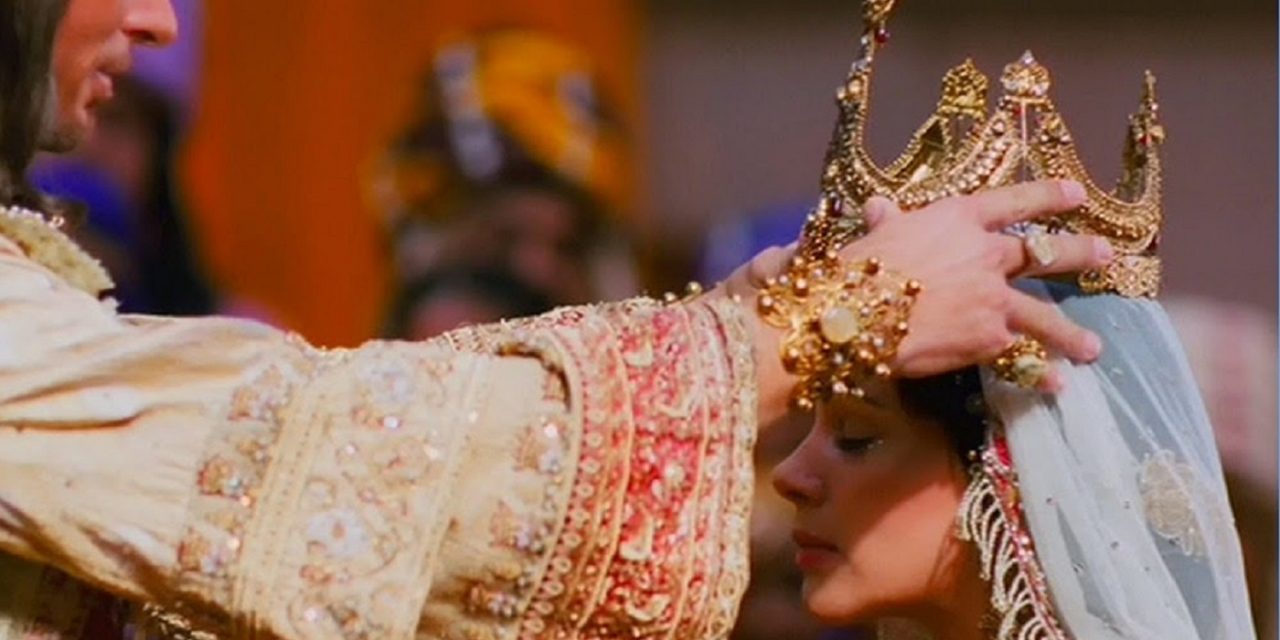
Will you be a Watchman on the walls of Jerusalem?


“Pray for the Peace of Jerusalem: May they prosper who love you.”
The rebirth of Israel in 1948 and the reunification of Jerusalem in 1967 are two of the most significant events in world history, both of which were foreseen in Bible prophecy. This year God’s chosen nation and His holy city are celebrating important milestones. 
It is 50 years since the reunification of Jerusalem and 100 years since the signing of the Balfour Declaration, which helped lead to the creation of the modern State of Israel. We believe these events have spiritual significance for the world.
When Jerusalem was reunified in June 1967, it brought an end to more than 1,800 years of Jerusalem being occupied by invading forces. Even though Jews dwelt in Jerusalem throughout this time, the city was now rightfully returned to the Jewish people, fulfilling Bible prophecy and God’s promises that have been spoken by Christians and Jews throughout the ages.
There is so much truth and revelation to be found about Israel and Jerusalem in the Bible, but on this Jubilee let us focus on how Jerusalem is God’s beloved city.
One of the greatest kings of Israel was David. He did great things in his time, from slaying Goliath to building Jerusalem. Second Samuel 5:9-10 explains that as King David built the city, he became more powerful, “because the Lord God Almighty was with him”.
Jerusalem became known as “the City of David”, being called this 45 times in Scripture and is still known as such today. The name David means “beloved”, and David was God’s beloved, just as the City of David, Jerusalem, is God’s beloved city.
We also know from Scripture that God Himself described David as “a man after my own heart”. This means that David and God were in harmony. So it is no surprise that the Psalms of King David abound with revelation on Israel, Jerusalem and Zion, just as God’s heart abounds with love for His land, His city and His people.
The Psalms are the basis for a multitude of hymns and songs that millions of Christians around the world sing in worship each week. These timeless songs are filled with praise to God with many verses proclaiming His promises over Israel and Jerusalem.
If we want to have a passion after God’s own heart, then we will want to see Jerusalem as David saw it. Psalm 122:6 says: “Pray for the peace of Jerusalem: May they prosper who love you. Peace be within your walls, Prosperity within your palaces.”
We encourage you to read the whole of Psalm 122. It is one of many Psalms that reveal God’s heart for Jerusalem.
When we “pray for the peace of Jerusalem”, we are praying for God’s peace in His city, the capital of Israel and epicentre of present and future global events. The root of the word Jerusalem is “Shalem”, which is the same as the Hebrew word for peace, “Shalom”. Jerusalem’s name literally means “the City of Peace”.
It is only when we seek God that we find true peace. And the Bible says that those who love Jerusalem will prosper. Why? Because God loves Jerusalem. We prosper when we follow God’s heart.
Just as the Bible says to pray for Jerusalem, we are also called to watch over Jerusalem.
Isaiah 62:6-7 says:
“I have set watchmen on your walls, O Jerusalem; They shall never hold their peace day or night. You who make mention of the Lord, do not keep silent, And give Him no rest till He establishes And till He makes Jerusalem a praise in the earth.”
This command is clear, Christians must watch over Jerusalem, raise our voices for Jerusalem and pray for the peace of Jerusalem. We believe that CUFI and our supporters are called to take up this cause. We must be vigilant in our watching and never cease to speak out. And the Scripture shows it is God’s heart for Jerusalem to be “a praise in the earth”.

Israeli system id’s the gene mutations driving your cancer


NovellusDx analyzes each patient’s genome sequence to deliver actionable intelligence to oncologists, helping them choose the right cancer therapy.


Inside the NovellusDx lab in the Jerusalem Bio-Park, a team of 35 biologists, engineers, mathematicians and physicians recreates the genetic maps of real human individuals with cancer.

It’s not a research project but a personalized medical tool.
The NovellusDx team analyzes the cancer-driving mutations in each patient’s DNA to deliver actionable intelligence to oncologists, helping them choose the right cancer therapy for each and every one.
NovellusDx CEO Haim Gil-Ad explains that although genomic sequencing already is starting to be performed for cancer patients and is likely to become standard, sequencing can reveal tens or even hundreds of mutations but cannot annotate the exact eight to 12 driver mutations that are actually enabling the tumor to grow.
The Israeli company is filling this gap in knowledge.
“Every patient is different,” Gil-Ad tells ISRAEL21c. “Two 35-year-old women with breast cancer, living in the same place and having similar physical features, will have totally different oncogenic maps.”
NovellusDx uses genomic data sent to its lab by email – no actual patient samples are needed – to recreate the individual’s genetic map on a unique biochip.
The company’s proprietary technology measures the activity of signaling pathways to assess the oncogenic action of known and unknown mutations and their response to cancer drugs. It also provides a hierarchy of driver mutations and mutation “cross-talk.”
Projects with major cancer centers
Founded in 2011 and in operation since May 2012, NovellusDx is working with oncologists in about 20 prominent cancer medical centers, mainly in the United States, including MD Anderson in Texas, Memorial Sloan-Kettering in New York and Massachusetts General.
“If the oncologist has a dilemma of which mutation to target first, NovellusDx can find the right target and you can try different types of drugs on a single mutation to see which gives the best results,” says Dr. Nir Peled, medical adviser for NovellusDx and head of the Thoracic Cancer Unit and the Center for Precision Cancer Care at the Davidoff Cancer Center of Rabin Medical Center in Petah Tikva.
“The platform annotates known and unknown mutations, prioritizes between different genes and classifies the effect of different drugs for the same target. I’m not aware of any other specific platform with the ability to do this in one place in a certified lab within a week,” says Peled, who also heads the Thoracic Oncology Assembly of the European Respiratory Society.
“I am using the platform under a clinical study, and it may support some decisions,” he tells ISRAEL21c.

Sample web page that is part of a dynamic physician report of his patient’s oncogenic map. Image courtesy of NovellusDx
The company also has several projects ongoing with diagnostics and biopharma companies. The NovellusDx solution helps them identify expanded subgroups of cancer patients who are likely to respond to existing therapies, stratify patients to enable more focused and efficient trials and isolate new mutations to target.
“We have also established an exciting collaboration with the Institute Curie’s SHIVA trial, where we demonstrated our ability to clinically predict response,” says Gil-Ad, referring to the French research institute’s groundbreaking personalized medicine project to genetically map hundreds of patients’ malignant tumors.
A paper on this collaboration is soon to be published in a scientific journal.
Scaling up
In its current facility on the campus of Hadassah Ein-Kerem Medical Center, NovellusDx can perform 6,000 tests per year, each taking less than two weeks.
The company is starting a new financing round to boost its commercialization and build facilities in the United States, Europe and Asia. Its previous $16.5 million funding round in 2015 was led by OrbiMed, Pontifax, Intercure and several institutional investors.
“Our major issue now is scaling up,” says Gil-Ad, who retired from the Ministry of Defense 12 years ago.
Gil-Ad tells ISRAEL21c that his defense background was unexpectedly relevant to his current work.
“Both the life-sciences and defense industries demand a ‘system of systems’ approach and are highly regulated, which gives some advantages over competitors. And in both areas you save lives,” he points out.
The scientist who had the idea behind NovellusDx’s core technology first approached Gil-Ad because he thought it would be useful for the air force.
Instead, Gil-Ad saw a more global potential. “I saw there was an unmet need in cancer and I built the company around the technology


ISRAELI START-UP EXTRACTING WATER FROM AIR, AROUND THE WORLD


From the remote corners of India to the palm-lined streets of Miami-Dade County, one Israeli company is aiming to do the unthinkable – extract safe, inexpensive potable water from the air we breathe.

Water Gen made headlines at the AIPA C Policy Conference in Washington two weeks ago, when Prof. Alan Dershowitz presented the company’s GENius device, generating water out of thin air on stage.

Just days earlier, the company had signed a memorandum of understanding to install its technology in Vietnam’s capital city, while days later, the firm inked another memorandum with India’s Vikram Solar Pvt. Ltd., to deploy solar powered Water Gen units in remote parts of the subcontinent.


“All these countries that have the water shortages have a humid and hot climate,” Pasik told the Post. “We take all the humidity from the air and extract the water.”

The memorandum of understanding signed with the Hanoi Department of Construction calls for the construction of a Water Gen factory, to produce industrial-scale water generators for the municipality, with a total capacity of up to 10,000 liters of water per day, Vietnamese news sites reported.

“Our solution is 20 times cheaper than the solution for drinking water that they have,” Pasik said. “[And] what they drink is not healthy.”

In India, the memorandum inked between Water Gen and Vikram Solar enables the latter to manufacture and distribute the Israeli company’s products, incorporating solar power to fuel the water generation process in remote locations.

Yet Water Gen’s reach is by no means limited to the developing world. The products have recently generated interested in several Gulf countries, in Egypt, in Mexico and across the United States, Pasik said. In the US, Water Gen is operating a pilot study in Miami-Dade County and is in talks with various entities in California, Chicago and Michigan, he added.

While most of these places do have access to clean water, many are beginning to experience strain on their aging pipes, requiring shipments of bottled water to residential neighborhoods, Pasik explained.

“We can solve this problem,” he said. “They can put our home devices inside people’s houses and they will have water.”

Water Gen’s technology aims to provide clean, drinkable water to consumers regardless of the infrastructure leading to their homes, according to Pasik.

“This is really the next source of water,” he said. “Desalination plants are good when you have good pipes. If you have bad pipes it doesn’t matter how much good water you put in the pipes.”

The GENius technology works on-demand by trapping the humid air inside the device, then cleaning and drying the air and extracting the now clean water, Pasik said.

Because the heat exchanger is made from plastic rather than aluminum, as has been typical in other such mechanisms to extract water from air, the system is much more affordable, he said. Generating 1 gallon (3.785 liters) of water requires only 1 kilowatt of energy, he added.

The system is available as a large-scale industrial water generator, a medium-scale model and the “GENNY” home appliance for household use.

Pasik said seeing his company’s technology generate a potable resource around the globe is critical, as “water is the next oil for the world.” About 1.7 million children under the age of five die every year due to water scarcity issues, he said.

“There’s nothing more important in the world than water,” he said. “People cannot live without water.”

Pasik said that in the future, technologies like Water Gen’s devices will have the capacity to prevent wars and foster peace, in regions where people are fighting for access to clean water.

“It’s very important that this kind of solution comes from Israel,” he said. “This is kiddush Hashem [sanctification of God’s name] and tikkun olam [repairing the world].”


As an investor in sustainable technology solutions, Pasik also serves as executive chairman at a variety of other Israeli and international companies, including the Ramot Hashavim-based Vertical Field and partner Green Wall Israel, which focus on building natural gardens on vertical surfaces.

“The biggest problem in the world is drinking water and the second is pollution,” he said, “We don’t have a place in the city to put trees.”

A 1,000-meter vertical field is equivalent to 50 trees, each 15 meters tall, which would take many years to grow, Pasik explained. Today, Green Wall is carry out several municipal pilots around the world, in Israel, India, China, the US, Mexico and Europe, he said.

While Vertical Field and Green Wall can provide critical solutions to dense urban communities plagued by air pollution, Pasik stressed that solving the world’s water scarcity problem is still his top priority.

“Two-thirds of the world has drinking-water problems,” Pasik said. “This is a humanitarian issue. We would like to maintain peace between people and save people’s lives. The project itself is priceless and is huge.”